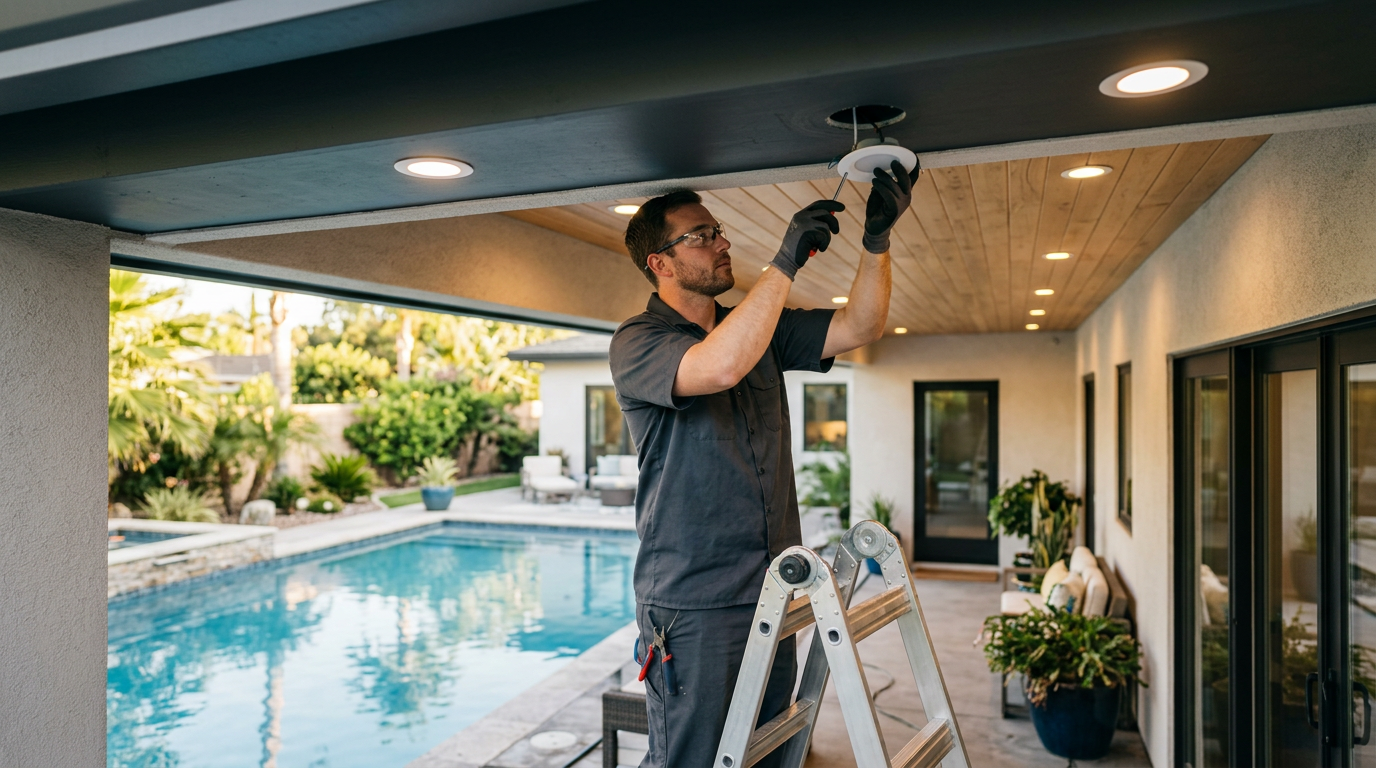
Power Surge Signs After Summer Storms
Power surge signs can be easy to miss—especially when everything seems to “work fine” after the lights flicker. Homeowners and small business owners often notice a few odd behaviors (a tripped breaker here, a dead charger there) and chalk it up to normal wear. The problem is that a surge can damage sensitive electronics in subtle ways before something fully fails. In the warmer summer months, when air conditioners, pool equipment, and other high-demand devices run more often, your electrical system may have less margin for sudden voltage spikes.
Below are the most common warning signals, why they matter, and what to do next—without panic, but with the right level of caution.
If you’re looking for help identifying and addressing power surge signs in Winder, GA, an electrician can test circuits, inspect grounding, and recommend practical surge protection options for your home or business.
What You Need to Know First
- Surges don’t always kill devices immediately—some damage is cumulative and shows up later as glitches or early failure.
- Repeated breaker trips, “mystery” device resets, and burnt electrical smells can be warning signals worth investigating.
- Power strips help, but they’re not the same as whole-home surge protection and can wear out over time.
- Grounding and bonding issues can make surge damage more likely and harder to predict.
- If you notice heat, arcing, scorch marks, or persistent burning odors, stop using the affected circuit and get professional help.
How Surges Affect Your Home’s Electrical System
A power surge is a short, fast spike in voltage that can travel through your wiring and into connected equipment. Some surges come from outside (utility switching, nearby lightning), while others are created inside the building when large motors cycle on and off (HVAC systems, refrigerators, well pumps, shop tools). Even when a surge is brief, it can stress insulation, weaken internal components, and shorten the lifespan of electronics.
Think of it like repeatedly tapping a glass on the counter: one tap might do nothing, but enough taps can create tiny cracks that eventually become a break. That’s why paying attention to early warning signs can help you prevent bigger failures and reduce safety risks.
Why Waiting Can Get Expensive (and Risky)
Ignoring surge symptoms can create a chain reaction of hassles: intermittent electronics, nuisance breaker trips, damaged chargers and power supplies, and eventually a major device failure at the worst time. Beyond replacement costs, electrical damage can introduce safety concerns—overheating connections, compromised insulation, and arcing in outlets or switches.
It also becomes harder to diagnose later. When multiple small issues pile up, you’re left playing electrical “whack-a-mole” with random failures instead of fixing the root cause (like a grounding problem, a failing breaker, or inadequate surge protection).
Costly Mistakes to Avoid When You Notice Surge Symptoms
- Resetting breakers repeatedly without investigating — A breaker that keeps tripping may be responding to a real fault or overheating condition.
- Assuming a power strip equals full protection — Many strips only handle certain surge levels, and their protective components can degrade silently.
- Continuing to use a warm or sparking outlet — Heat and arcing can indicate loose connections or damaged devices that need immediate attention.
- Ignoring “small” electronics failures — Multiple dead chargers, routers, or smart devices can be a pattern, not bad luck.
- DIY fixes inside the panel — Panel work can be dangerous and may require permits or licensing depending on the scope.
- Replacing devices before checking the circuit — A new appliance plugged into a compromised circuit can be damaged the same way.
A Practical Checklist: What to Do When You Suspect a Surge
- Document what happened — Note which rooms/devices were affected, what tripped, and what smells/sounds you noticed (if any).
- Unplug sensitive electronics temporarily — Especially if you’re seeing repeated flickers, resets, or breaker trips.
- Check GFCI/AFCI devices and reset once — If they immediately trip again, stop and investigate further.
- Inspect outlets and cords for heat or discoloration — If anything looks scorched or smells burnt, don’t use it.
- Test suspect devices on a different circuit — This can help separate “device problem” from “circuit problem.”
- Consider layered surge protection — A whole-home surge protective device plus point-of-use protection for sensitive equipment is a common approach.
- Schedule an electrical inspection if issues persist — An electrician can check grounding, bonding, breaker condition, and signs of overheated connections.
Professional Insight: The Pattern We See Most Often
In practice, we often see homeowners focus on the one device that failed (like a TV or router) while the bigger clue is the “cluster” of small weirdness—random resets, a few dead chargers, a tripping breaker, and lights that dim when a motor starts. That combination frequently points to an underlying electrical issue worth checking, not just a single unlucky gadget.
When DIY Stops and an Electrician Should Step In
Seek professional help if you notice any of the following:
- Burning smell, melting, or smoke from an outlet, switch, cord, or panel area
- Scorch marks around receptacles, plugs, or power strips
- Buzzing/crackling from outlets, switches, or the electrical panel
- Repeated breaker trips that return quickly after a reset
- Multiple devices failing or acting erratic across different rooms
- Lights flickering or dimming frequently when appliances start
If there’s any chance a circuit is overheating or arcing, it’s safer to stop using that circuit and have it evaluated.
Common Questions Answered
Can a surge damage appliances even if nothing tripped?
Yes. Some voltage spikes are brief enough that breakers don’t trip, but sensitive electronics (control boards, power supplies) can still be stressed or damaged.
Do flickering lights always mean there was a voltage spike?
Not always. Flicker can come from loose connections, overloaded circuits, or utility-side fluctuations. If flicker is frequent or paired with device resets or breaker trips, it’s worth investigating.
Is a burnt smell at an outlet a serious issue?
It can be. A burnt odor may indicate overheating, arcing, or a failing device/connection. Avoid using that outlet and have it inspected.
Will a new power strip solve the problem?
A quality surge-protecting strip can help protect individual devices, but it won’t correct wiring issues or replace whole-home protection. If you’re seeing repeated symptoms, address the underlying cause.
What’s the difference between point-of-use and whole-home surge protection?
Point-of-use protection is at the device (like a surge strip). Whole-home surge protection is typically installed at the electrical panel to reduce surge energy entering branch circuits. Many properties use both for layered protection.
Taking Action Without Overreacting
Surge-related issues aren’t always dramatic, but the warning signals are worth respecting. If you’re seeing repeated odd behavior—resets, tripped breakers, warm outlets, or burning smells—take a few basic safety steps and don’t keep “testing” the problem by powering things back on. A targeted inspection can help you identify whether you’re dealing with a one-time event, a worn component, or a bigger electrical system issue.
Ready to Get Started?
Our team is here to help. Give us a call to discuss your needs.
Recent Blogs